



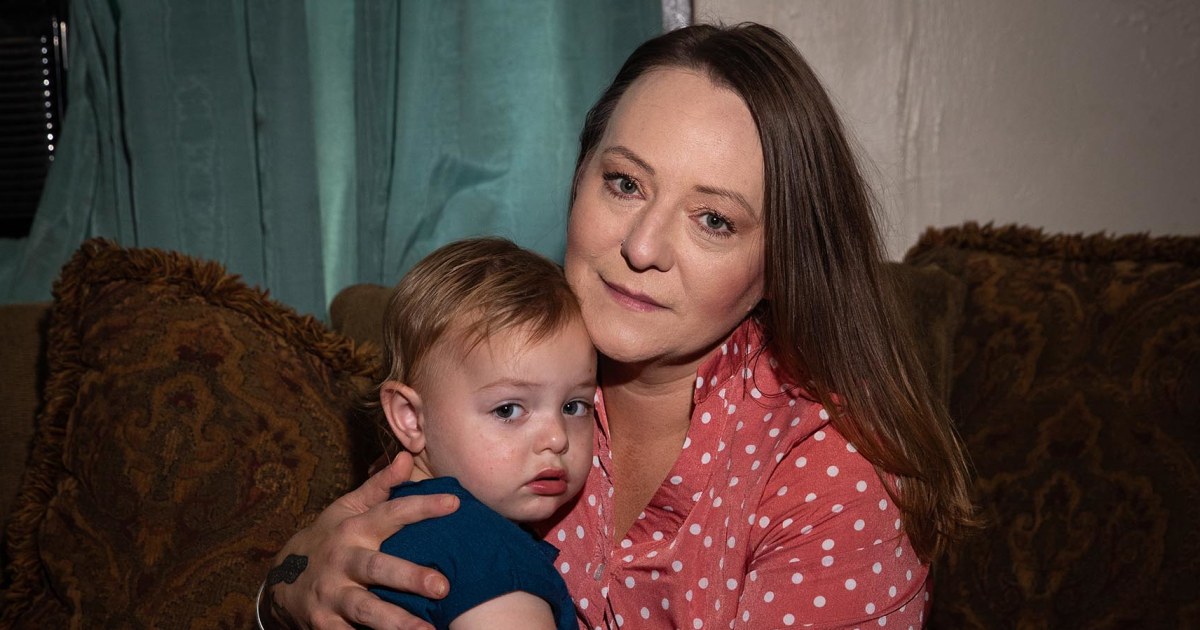
Today, Johnson has joint custody of her 2-year-old daughter. The state has custody of her 11-year-old twin boys but allows them to live with her. Her plea deal enabled her to avoid jail time, but she said she owes thousands of dollars in fees and fines. She now works in peer support for Aletheia House, a treatment facility, teaching life skills to women who face similar charges.
“I just love restoring faith in those women,” she said.
Still, she thinks handcuffs and jail bars aren’t the way to assist pregnant Alabamians struggling with substance use in a state that bans abortion with few exceptions.
“It’s just not right for us to have to face these charges when we’re in the middle of the worst darkness and addiction,” Johnson said.

Under the state’s chemical endangerment law, a convicted person can face up to a decade in jail if prosecutors don’t allege the fetus, or child, was harmed. If serious harm is alleged, the maximum sentence can climb to 20 years or more. The statute, initially passed in 2006 as a response to the rise in home meth labs, has since been used to charge pregnant women accused of drug use.
The American College of Obstetricians and Gynecologists has opposed legislative efforts to criminalize pregnant drug users.
“Drug enforcement policies that deter women from seeking prenatal care are contrary to the welfare of the mother and fetus,” it said in a brief.
Although Alabama charged women with chemical endangerment before Roe’s fall, Sussman said, the Dobbs decision “further opens the door” to the concept of fetal personhood, in which legal rights are extended to fetuses or even embryos.
Fetal personhood has been recognized through judicial decisions in the three states — Alabama, Oklahoma and South Carolina, according to an analysis by Pregnancy Justice — accounting for the most prosecutions in the group’s count.
“This ideology around giving rights to embryos and fetuses is not theoretical,” Sussman said. “It has real-world implications, devastating implications for the rights of pregnant people.”
Sussman noted that in 15 states during the 2024-25 legislative cycle, bills were introduced that would create or allow homicide charges for people who have abortions. None became law, but attempts persist. On Wednesday, a committee in the South Carolina Legislature is scheduled to hold a hearing on a total abortion ban bill that would allow homicide charges for some abortions.
Sussman acknowledged the troubling number of maternal deaths from overdoses and said the crisis should be treated as a public health priority, rather than a criminal matter.
Johnson sees it that way, too. She said she’s determined to stay clean and feels she has found her purpose. Still, “I have to fight every day,” she said. Addiction is “always doing pushups in the back, just waiting on me.”

link
More Stories
Beyond Morning Sickness: Hyperemesis Gravidarum
NEWS: ICE has been deporting pregnant and postpartum immigrants
How much exercise is safe during pregnancy? New research offers answers