



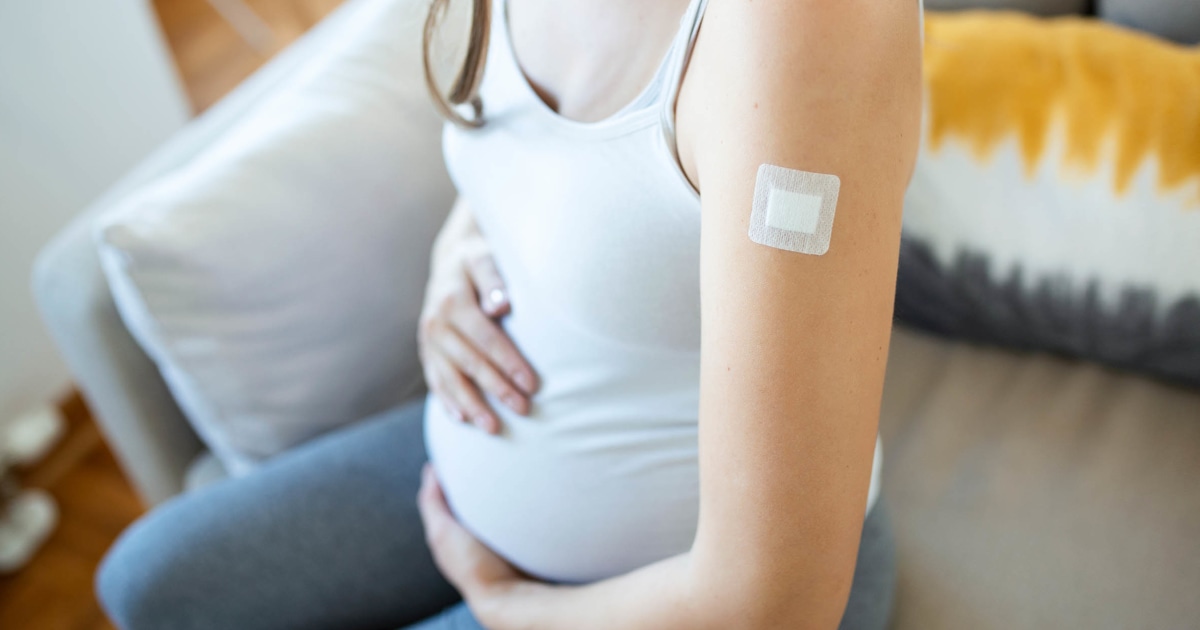
Pregnant women looking for a COVID-19 vaccine may find it harder to get one this year.
While top medical societies recommend pregnant women get a COVID shot to protect both themselves and their unborn babies, recent actions from federal health authorities have cast doubt on whether the vaccines are necessary during pregnancy.
In May, the Centers for Disease Control and Prevention removed its recommendation for pregnant women to get the shot. And this week, new COVID-19 vaccine recommendations were adopted by CDC, but they do not explicitly address what to do in pregnancy.
Maternal health experts tell TODAY.com they’re frustrated and concerned that recommendations are changing without scientific justifications, often leaving their patients confused.
“I’m getting questions about COVID vaccination and pregnancy on an almost daily basis,” Dr. Justin Brandt, associate professor in the department of obstetrics and gynecology at NYU Grossman School of Medicine and director of the division of maternal-fetal medicine at NYU Langone Health, tells TODAY.com.
“But our guidance has not changed,” he adds.
“The science has not changed,” agrees Dr. Mark Turrentine, a professor of obstetrics and gynecology at Baylor College of Medicine and member of the expert work group on immunization of the American College of Gynecologists and Obstetricians.
“Millions of pregnant women and billions of people have gotten the COVID vaccine. We have a great safety and efficacy track record, and so it has not changed,” he tells TODAY.com. “And that’s caused a lot of my frustration, and a lot of frustration (among) experts across the country.”
Dr. Neil Silverman, professor of clinical obstetrics and gynecology at the David Geffen School of Medicine at UCLA, sees this as only the latest step in a “battle on public health.”
He tells TODAY.com that COVID-19 vaccines are being used as a “political football,” and says the loss of trust in federal health systems is “not just saddening, but infuriating.”
With so much confusion ahead of respiratory virus season, experts say it’s important to reaffirm the safety of and need for COVID-19 vaccines during pregnancy. Here’s what to know about getting one.
Should Pregnant Women Get a COVID-19 Vaccine?
Generally, yes, experts say.
Current recommendations from ACOG and the Society for Maternal-Fetal Medicine agree that patients should receive a COVID-19 vaccine at some point when trying to become pregnant, during pregnancy or during lactation.
The vaccine is safe during pregnancy and can significantly reduce the risk of severe complications from COVID-19, data show. That’s important, because pregnant women are at a higher risk for severe complications from the virus, including those requiring hospitalization, as well as loss of the pregnancy and stillbirth.
Even a mild case of COVID can cause discomfort or a fever, which can lead to complications, Brandt says.
The professional society recommendations also highlight that vaccination during pregnancy leads to protection for babies during the first few months of their lives, when they are too young to be vaccinated against COVID-19.
What Does the CDC Say About the COVID Vaccine in Pregnancy?
The CDC had the same recommendations for COVID-19 in pregnancy as the professional medical groups until May — when Health and Human Services Secretary Robert F. Kennedy Jr. bypassed the typical regulatory process and announced the CDC would no longer recommend routine COVID shots for “healthy pregnant women,” NBC News reported at the time.
Then, in September, a CDC advisory panel called the Advisory Committee on Immunization Practices voted on new guidelines for COVID vaccination. But the committee declined to make recommendations for pregnancy specifically, deferring the decision to CDC officials. (Earlier this year, Kennedy fired all members of ACIP and hand-picked replacements, some of whom are known anti-vaccine activists, NBC News reported.)
In the last regulatory step this week, the CDC signed off on ACIP’s decisions — which require anyone getting a COVID vaccine to participate in “shared clinical decision-making” with a doctor, nurse or pharmacist beforehand — but the agency still has not made explicit recommendations about pregnancy.
However, when federal health officials announced the new recommendations, they noted that “the risk-benefit of vaccination in individuals under age 65 is most favorable for those who are at an increased risk for severe COVID-19,” which includes pregnant people, per the CDC’s list of high-risk conditions.
Still, the new CDC immunization schedule falls short of recommending the shot for pregnant people.
“It’s a complete Orwellian kind of double-speak, and patients are the ones who are caught in the middle,” says Silverman, who is also a member of the expert working group on immunizations at ACOG.
Ultimately, the experts tell TODAY.com that the CDC recommendations are leading to confusion and new barriers to access a safe, effective and previously routine vaccination.
Where Can Pregnant People Get a COVID Shot?
The experts say the first step to getting a COVID shot in pregnancy should be discussing it with your OB-GYN and asking if they have guidance on locations in your community offering them to pregnant people. The main locations where people, including pregnant individuals, can get COVID vaccinations are pharmacies, doctors’ offices and outpatient clinics.
You might also want to call your insurance provider to make sure the vaccine is covered and ask if they have any recommendations for where to get it in your area. Most private and public insurance companies should cover it, experts previously told TODAY.com.
Pregnant individuals may encounter providers, such as pharmacists, who are hesitant to vaccinate them due to the new guidelines, which is why it’s important to call and ask beforehand. All the experts TODAY.com spoke to for this story say they’ve heard from patients who have faced challenges when getting their COVID-19 shot at a pharmacy.
Some of Brandt’s patients have had to call multiple pharmacies to find one that would give them the vaccine, he says, adding that logistical challenges are contributing to vaccination delays for his patients as much as the confusing recommendations.
Some health systems, such as UCLA Health, are offering COVID shots at outpatient clinics, as well as hospitals, says Silverman, who has been administering them when seeing patients.
And due to access challenges in pharmacies, the experts say more obstetricians are starting to offer the updated COVID-19 vaccines in their offices, as they already do for Tdap and RSV vaccines. It wasn’t common to offer COVID shots in doctor’s offices before the new guidelines, as they’re are more expensive and difficult to stock, and CDC data from past years shows most people got their COVID shots at pharmacies.
Last, keep in mind that your access to a COVID vaccine can vary by state. At least 26 states have moved to expand access beyond the federal guidelines, according to KFF, a nonpartisan health policy research group.
Uphill Battle Against Vaccine Misinformation
Changes to vaccine guidelines and messaging from federal health officials without any changes in the relevant science come as pregnant patients and the general public are already confused about COVID vaccines, the experts tell TODAY.com.
Silverman cites the results of an August poll from the Annenberg Public Policy Center, which found that only 42% of respondents agreed that it was safe to get an mRNA COVID-19 vaccine during pregnancy. And women of childbearing age were even less likely to agree than the general public.
Adding to the concern, hesitation around the COVID-19 vaccine may now be spilling out to make patients hesitant to get other routine vaccines during pregnancy, Turrentine says. (TODAY.com previously reported on this pattern with regards to childhood vaccination rates.)
For example, he’s encountered patients who have gotten the Tdap (tetanus, diphtheria and pertussis) vaccine in previous pregnancies but now, with misinformation swirling, they question the need for that vaccination in their current pregnancy.
“What has changed? The science is the same,” Turrentine says, adding that he feels “dumbstruck” and “frustrated” when patients who previously followed the evidence-based recommendations now question them.
Silverman echoes these concerns, adding that “flu vaccination for pregnant patients has dropped consistently every year since the beginning of the pandemic.”
While nearly 60% of pregnant patients got the flu shot pre-pandemic, only about 38% of those patients received the vaccine in the most recent flu season, according to CDC estimates.
“It’s a continual uphill battle,” Turrentine says, “and it’s getting steeper every day.”
link
More Stories
Beyond Morning Sickness: Hyperemesis Gravidarum
NEWS: ICE has been deporting pregnant and postpartum immigrants
How much exercise is safe during pregnancy? New research offers answers